Tuesday, June 27, 2006

Swampbird?

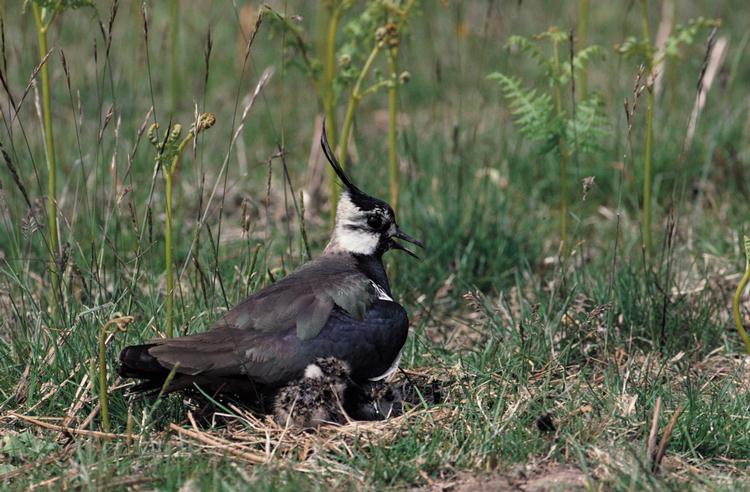
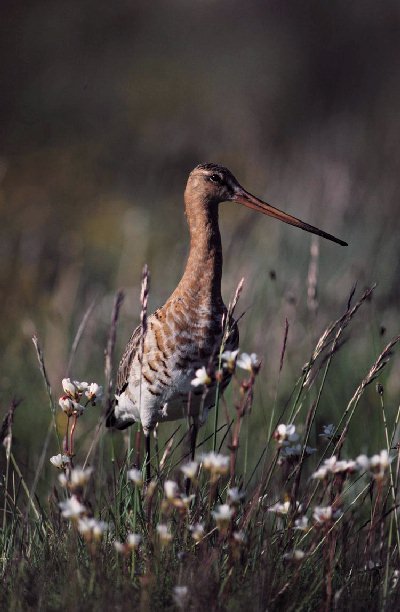
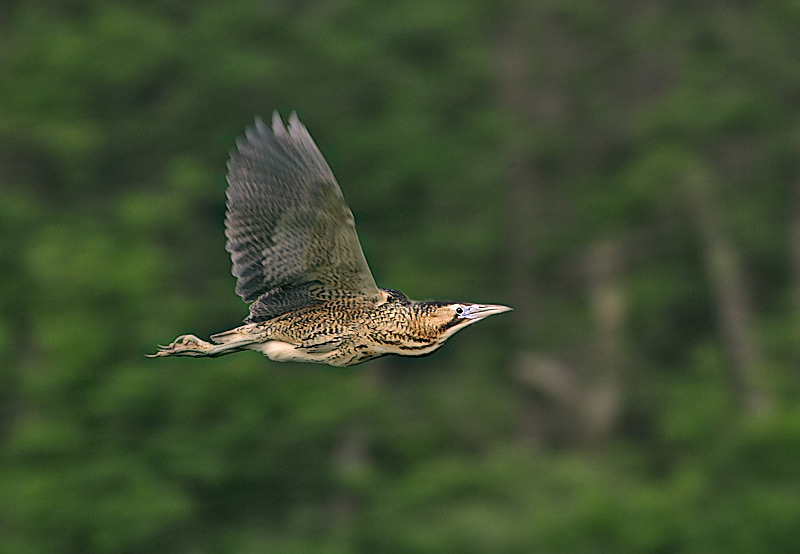
In the post about the kayaktour in “de Venen” I used the word “swampbird”. I received some questions on this word. I am not a bird-specialist neither a great linguist. With the swampbird I meant a bird living in a swamp. In Dutch we distinguish the category of “moerasvogels” (moeras = swamp, vogel = bird). I am not sure if you can make the contraction of both words in English. I found some hits on Google but they were relatively rare. So I suppose in English there is an other word used for birds living in a swamp? And what about "meadowbirds"?

A nice reason to show pictures of my favourite swamp- and meadow birds in the Venen!
All the pictures are from the website of IVN Vechtplassen. If you are interested in Dutch birds it's sure worth a visit! IVN is a Dutch organisation for nature and environment education.


Swampbirds:

Roerdomp


Purperreiger


Zwarte Stern


Meadowbirds:

Kievit


Grutto

Sunday, June 25, 2006

The paddler in front of me...


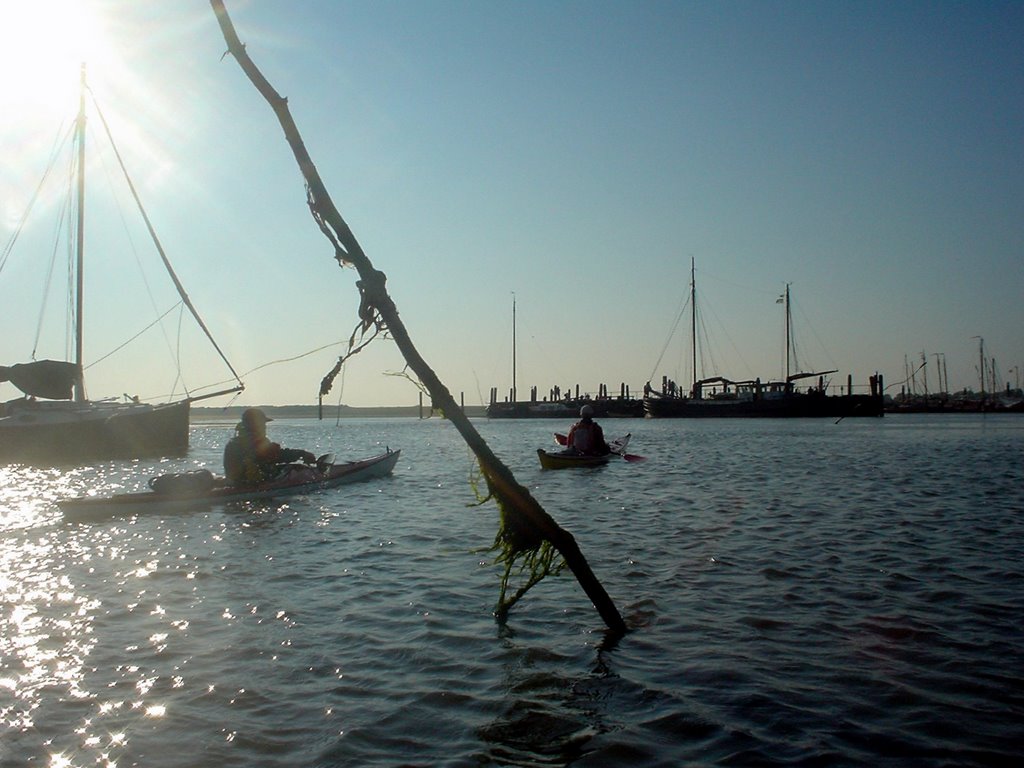
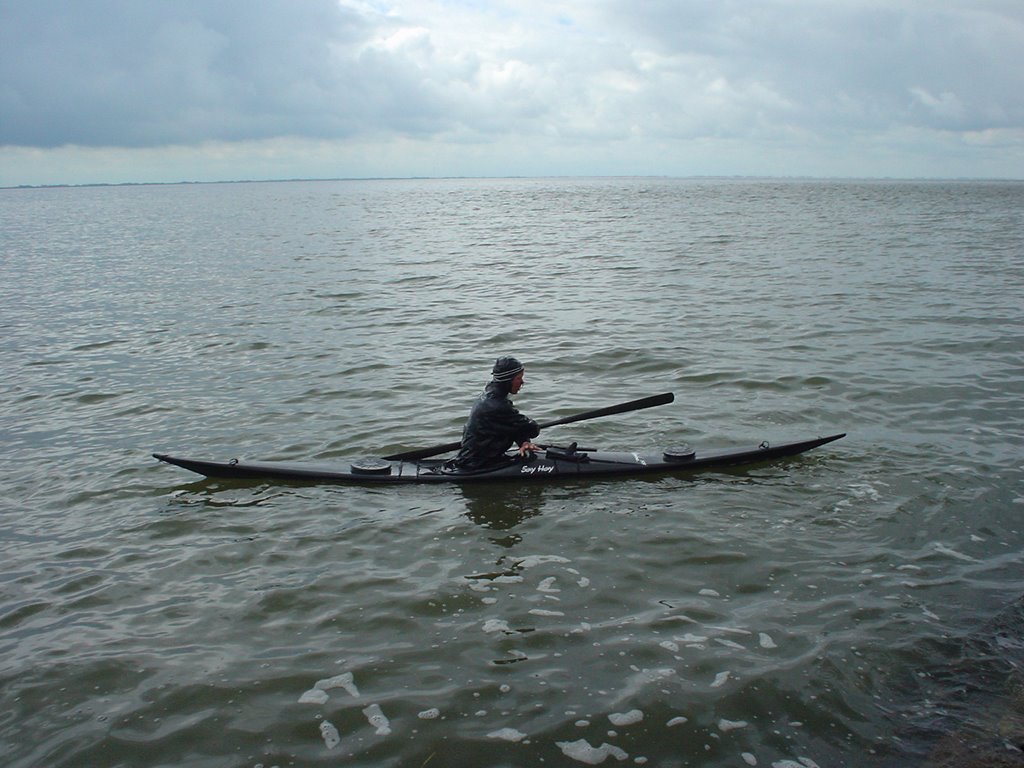
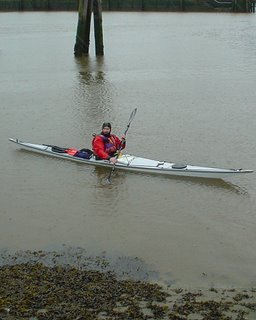
The man on the picture is Gerrit, member of kayak club "De Kromme Aar" in his beautiful carbon-kevlar Nordkapp Jubilee . Today Gerrit was leading the yearly kayaktour through the region of "de Venen" on the Marathon distance of 42,195 km. I am still not sure if Gerrit did this because of the predicted showers and thunderstorms, but he made a speedy trip of it. Whatever: I enjoyed this sporty tour. For training on speed, nothing works better than the motivation of a fast paddler in front of you.
To get a reference for upcoming experiments with the wing-paddle I paddled with the GPS as a speedometer today. Conclusions about my speed with the Valley Pintail and the Lendal Nordkapp-paddle:
- 8 - 8,5 km/h is a comfortable cruising speed on long distances;
- 8,5-9 km/h requires more effort but can be maintained for a long time without exhaustion;
- 9 - 9,5 km/h is possible for a sprint of 5 or 10 minutes to get back to the paddler in front of you, but is exhausting!;
- above 9,5: pffff....
I am sure I need a lot of training before I get real profits from paddling with the wing, so please don't expect conclusions at an early date.

Don't think we were only speeding today. "De Venen" is Holland at it's best. It's a peat-soil region with a fascinating variation of meadows, swamps, lakes and little rivers. It's a breading-place for lots of otherwise rare meadow- and swampbirds. And it's a perfect region for kayaking on placid water. So I wondered why there wasn't more interest for this kayaktour: 1o participants on the 42 km and 8 on the 21 km -distance. The organization by KV de Kromme Aar was perfect. Thanks for this very nice day!

Wednesday, June 21, 2006

A superb paddle!

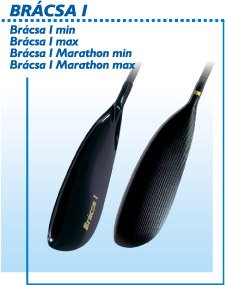
The superb quality and outstanding performance of BRAČA-SPORT paddles is highlighted by the number of Gold, Silver and Bronze medals won at World Championships and Olympic Games by athletes using our products. The majority of today’s world class paddlers make BRAČA-SPORT their #1 choice.
BRAČA-SPORT paddles enjoyed great popularity at the World Championships and the Olympic Games of the millennium in Sydney. An overwhelming majority of the finalists used our paddles.
The Braca I is the original design and our most widely used paddle. A number of our other models were developed from this ever-popular classic shape. It is recommended for male athletes. (picture and text -
http://www.braca-sport.com )

My newest toy is this high tech carbon fibre wing paddle! On his continuous quest for perfection one of the team members of the Dutch National Flatwater Kayak Selection changed his paddle brand. So I could take over an as good as new Braca I. I am so happy. Since a long time I want to experiment with a wing paddle. Once in a while I had a change to borrow one for an hour or so, but now I have got my own one and really can work on it!

First impressions after an hour paddling this morning: Wow! It feels enormous powerful and gives a great speed sensation. However, I must admit that, after just one try-out, it’s very difficult to say if it’s more than only the suggestion of power and speed. Checking with the GPS I noticed that there was no difference in the max speed I could make with the Euro-paddle or with the Wing. With both paddles over 11 km/h it felt as if I was paddling against a wall and I couldn’t make any more speed. As the Pintail isn’t known as a seakayak with a high hull speed, it is probably not the best kayak to do this test. I also tried out a flatwater-touringkayak of Wyrda. I could paddle that kayak on a higher speed level without fighting against my own bow wave, so I suppose in a faster kayak there should be more difference noticeable in max speed between the Euro and the wing.
It is even more difficult to make objective comparisons about cruising-speed. I paddled the Pintail with the Wing comfortable at 9 km/h, but I can’t say if that took more or less effort than with the Euro-blade. I suppose it costs less energy. I did my favourite test round (“het rondje Singel”) paddling fast, without pushing it to the limit, in 17.45 min. My best time before with the Pintail was 18.20 min. My personal record on this course is (with the Svalbard - a faster seakayak than the Pintail) 17.20 min. I made that record the first time I did “rondje Singel” with a stopwatch, more than a year ago, and since then I never came close to this PR.

After trying out speed, I did some experiments with the handling of the Wing paddle. Rolling left and right didn’t give any problem. The butterfly-roll (one of the rolls I learned from Freya) also went perfect. But that is no wonder: as a matter of fact you don’t need a paddle for the butterfly-roll (without a paddle: call it a hand-roll!). The big surprise came with the re-entry with an extended paddle: normally one of the easier exercises, but this time: I hardly made it! It took me 3 times before I could come up with the Wing Paddle. I really had to figure out how to keep the paddle-blade from diving. The asymmetric shape of the blade requires much attention. Sculling also proved to be a challenge, but I made it on the right side.
The awkward thing about the handling of the wing I found the behaviour with all those small corrective strokes you normally make without even thinking about it. With a moving kayak and strokes like the bow draw or rudder the wing blade tends to “bite” suddenly in the water. I have to work on that!

Altogether: I do realise I still have to learn to adapt my paddle style to the wing. That will cost some time, and I am looking for an experienced wing-paddler near Woerden to coach me. First I want to concentrate on the forward stroke: hoping for more speed on longer distances. There is an old K1-racing kayak at Wyrda, no one uses it: in the next months it’s mine!

Sunday, June 18, 2006

Father's day


Today was "Father's day", a yearly happening overtaken by manufacturers of electric shavers, men’s odours and other trash. Of course family Heupink doesn't participate in such a commercial happening. Poor Hans. However, there is still hope: the kids at primary school always produce some goodies for their father at Fathers day. Until now the creativity of the primary school teachers focused on coloured wooden or paper neckties. This year Lieke surprised her father with a scribbling-block decorated with a sea-kayak (note the day-hatch!). And while most Father days-presents end up in a drawer at papa’s office, this one goes on the world-wide-web!

Monday, June 12, 2006

Circumnavigation Schiermonnikoog

Due to technical problems with Blogger.com (and being to busy to spent much time blogging lately...), publishing of some posts as well as reacting on comments is delayed. Sorry!

Bram van Ankeren and I organised a two days trip around Schiermonnikoog for the NKB this weekend. We intendend to do this in two stages, bivouacing on one of the sandbanks on the east side of Schiermonnikoog. Alas: since shortly the rumour goes bivouacing on this sand isn't tolerated anymore (more on this will follow soon!) so we had to change our plan. Checking out the time table and the stream atlas it occured that saturday was a perfect day to circumnavigate Schiermonnikoog in one day. This changed the character of the trip (early up, a long paddle, and a 20 minutes walk with fully loaden kayaks from the harbour to the camp-site!), so we informed the participants previously of the weekend about the changing plan. Luckily most liked it, some were even enthousiast about the change to do a long paddle. Finally we kayaked with a group of 10. And while the rest of Holland was suffering a hot day (29 degrees Celsius), we paddled some hours in the fog and were shivering during the break on the beach on the north side of Schiermonnikoog...


day 1: HW Delfzijl 12.06, HW Schier 10.26, LW 16.15, O/NO 3 later 4 Bft. 56 km.

day 2: HW Delfzijl 12.45, HW Lauwersoog 11.06, SO 3-4 Bft. 8,5 km.

Thanks to Paul Stoop for the tracklog (blue = day 1, red = day 2)!

Snapshots of the trip on MijnAlbum.nl (next time I clean the lens before taking photos...)

Tuesday, June 06, 2006

Heddes Bouw Triathlon Woerden 2006

On Whit Monday Woerden is dominated by the Triathlon. Two distances: the 1/4 and the 1/8 triathlon with 250 participants swimming in the Singel, biking in the Green Heart from Woerden to Kamerik and running around the historical town centre.

Kanovereniging Wyrda was asked to supervise the swimming part, together with the diving-team of the firebrigade. Because of the low watertemperature (15 degrees Celsius) the organisation expected some drop outs. Only one swimmer gave up: Rob was his rescuer, he picked the exhausted atlete up with the bow of his kayak. The rest of our job was guiding the first swimmer along the course and keeping other boats away. In practice that's mainly just a bit drifting around. The kayakers were dressed in the Wyrda-cluboutfit to give local publicity to the kayak club. I doubt if that's very effective, but we had our fun. It's an odd sensation kayaking in the middle of a field of hunderds of swimmers.

One of the triatletes was my partner Janine. She finished first in her category (1/8, D40)! The Wyrda paddlers were very enthousiast and the idea came to participate next year with a team of the kayak-club. I am affraid this winter is going to be hard training: my running and swimming condition is not very good...

Sunday, June 04, 2006

Rolling with Freya - updated 06-06-06


Spiekeroog offered a unique opportunity to combine the NKB-SAU kayakcourse with a Greenland rolling class with Freya Hoffmeister. Many participants of the course made use of this occasion and all were very enthusiast about it. Of course I took my chance too ;-)
Kaat relaxing

If you read a kayak blog once in a while Freya probably won’t need any introduction. When you are new in this world: have a look at her website (it seems that some mr. D is involved in the making of). Freya is a great ambassador of Greenland style kayaking. QajaqUSA promotes the traditions and techniques of Greenland kayaking while seeking to further the appreciation and development of Greenland-style kayaking in the United States. It seems to be a big deal over there, with a lot of highly frequented Greenland Style symposia. In Europe Greenland style kayaking also is getting more attention. Since last year there is a Dutch qajaq-organisation, and with the Veluwe Rally in September 2006 the second Dutch Qajaq Meeting takes place.

At Spiekeroog Freya offered the interested a Rolling class starting with a (groupwise) theoretical introduction with a demonstration of the different rolls that lasted about 1,5 hours, followed by 2 individual lessons of each half an hour in one of her Greenland Kayaks. More than 20 people took part in the lessons, so you can figure out how many hours Freya spent standing up to here middle in the chilling cold water of the North Sea…
As I was busy coaching the Dutch-German group I didn’t have time to do a complete class myself (alas!). But I didn’t want to miss the experience so I made an appointment with Freya for an extra half hour session Saturday-afternoon, after Govert and I had delivered our groups safely back in Neuharlingersiel.

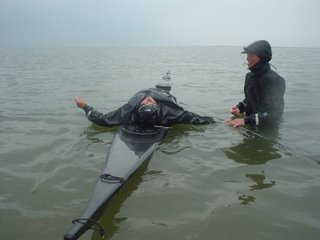
The rolling session with Freya was my first real introduction to Greenland Style rolling. I had never paddled or rolled a Greenland kayak before and also the Greenland-paddle (the stick) was new for me. Freya explained me the static brace, the butterfly roll, some different rolls with the Greenland paddle finishing forward and backwards and finally hand rolling. Quite a lot in 30 minutes, but I did ask for an overall-impression…
1. It was a great experience. I am very impressed:
by the perfect control and the natural feel the Greenland style kayaks and paddles offer when rolling;
2. it’s so easy to roll, that you can roll in slow motion and completely concentrate on body movement and the coordination of the roll (and coordination is complex with some Greenland rolls);
3. but most of all: I am so impressed by the way Freya did her classes! She talks fast, but she takes so much time and patience in teaching you the Greenland skills. I was her last pupil: before my private session, she had been standing three days, 25 hours in the cold water and yet she still was addicted to give me a complete impression of Greenland style rolling. Thanks Freya!


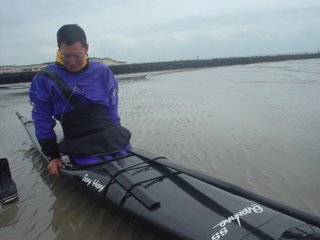
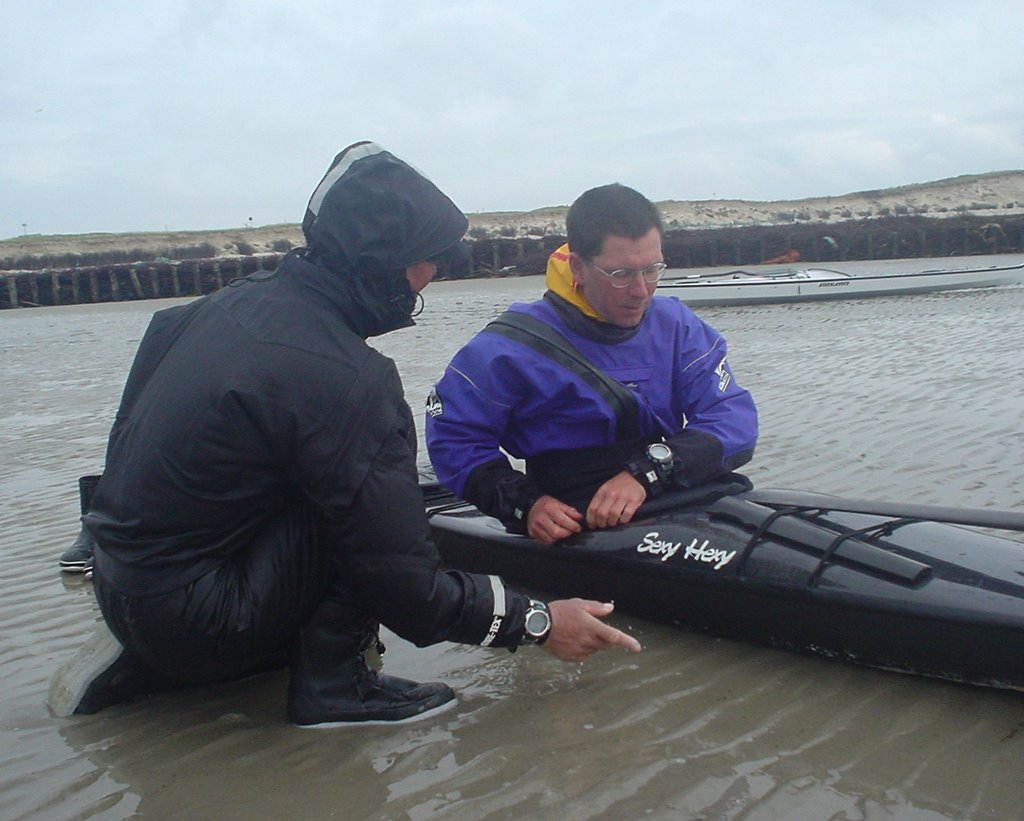
I did the session with Freya in Sexy Hexy, the Japanese carbon fibre Qajaq. After the lesson Freya loaned me her skin-on-frame kayak to try it out myself. I noticed some difference in comfort but the handling was very equal. It rolled just as perfect. I love it. I think I am going to have a good talk with Hakola in the near future…
Today I tried some of the Greenland techniques with my euro-paddles and my own kayaks in Woerden. A static brace in the roomy Svalbard with an euro-paddle is the perfect way to get drowned. It lacks boat contact, and I can’t lean far enough back on the Svalbard. The Greenland techniques worked better with the ww-kayak and the Valley Pintail. Though I had to adapt the Pintail a little bit: I added a block of 10 cm foam on my upper legs, slided forward on the seat and took out the back support. Nice for rolling, not so good for paddling.


Thursday, June 01, 2006

Spiekeroog day 4-9


Looking back at the item I posted about the first 3 days on Spiekeroog, I am not completely satisfied with the text I wrote.
That’s partly because of the presentation of the weather conditions. The daily marine weather forecast suggests it was all very heavy. Ok: it was not comfortable. It was pretty cold (10-13 degrees Celsius), but the wind was (mostly) not that dramatically as the forecast predicted. The marine weather forecast regards the whole German Bucht, the region of the Ostfriesisische Inseln is somewhat sheltered with winds from SW to W. So we could paddle every day, only making longer trips was out of the question. The most heavy winds (up to 7 Bft) occured at Sunday, when the group was already back home and Govert and I left Spiekeroog as some of the last kayakers. Just an hour before us Freya, Bernhard and Andreas took off for Neuharlingersiel. They were towing the 3 Greenland-kayaks of Freya and had a very hard job.

Sundaymorning, ready for leaving Spiekeroog

The main point why I am not totally content with my text, is however because it only describes the “technical” program of the course. And the pleasure in organising and guiding a week like this is not just working through an interesting “educational-kayak-program”. The essence lies for a big part in the social element: working and living close together with a bunch of individuals that become a group within a few days. I find it difficult to express by writing (in English…) the atmosphere of the week. So many things make the difference: The beautiful and restful scenery of Spiekeroog. The people in and around our group: Lars and his relaxed camping shop/café at the campsite. Old Laramy - the pub where we finished in the evening. Discussions with Silke about German economics and politics, with Bernhard about the German and Dutch kayak-philosophy. The stories of Kai and Anke travelling around the world. Hakola first leading the third kayak-course in his beautiful built Greenland-skof-kayak, and later coming back with his family in an original Umyak. All the other people I don’t mention now. And the outstanding culinary qualities of the German cooks: we had a great stylish dinner in the restaurant Inselzauber, and the absolute recommendation is Siwalu. The “Kutterscholle nach Finkenwerder Art” accompanied by great glass of wine “Gewürztraminer” are in itself a reason for a visiting Spiekeroog.
Let's finish the Spiekeroog report with a photo-impression.

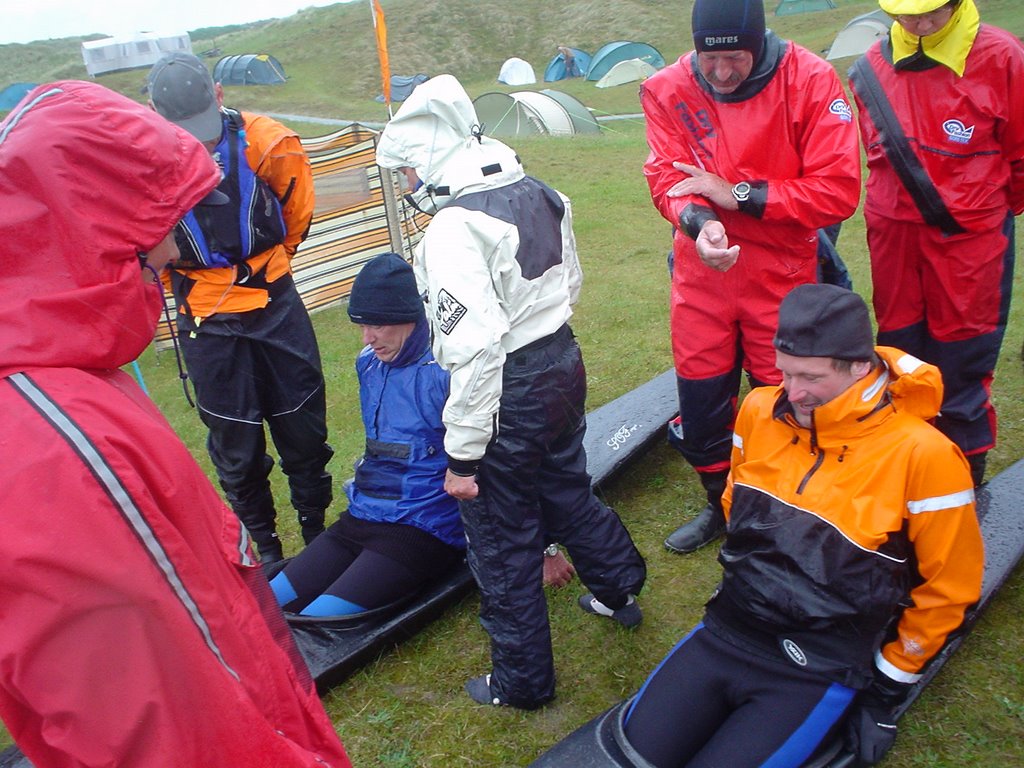
Preparing for praktizing the high brace with support

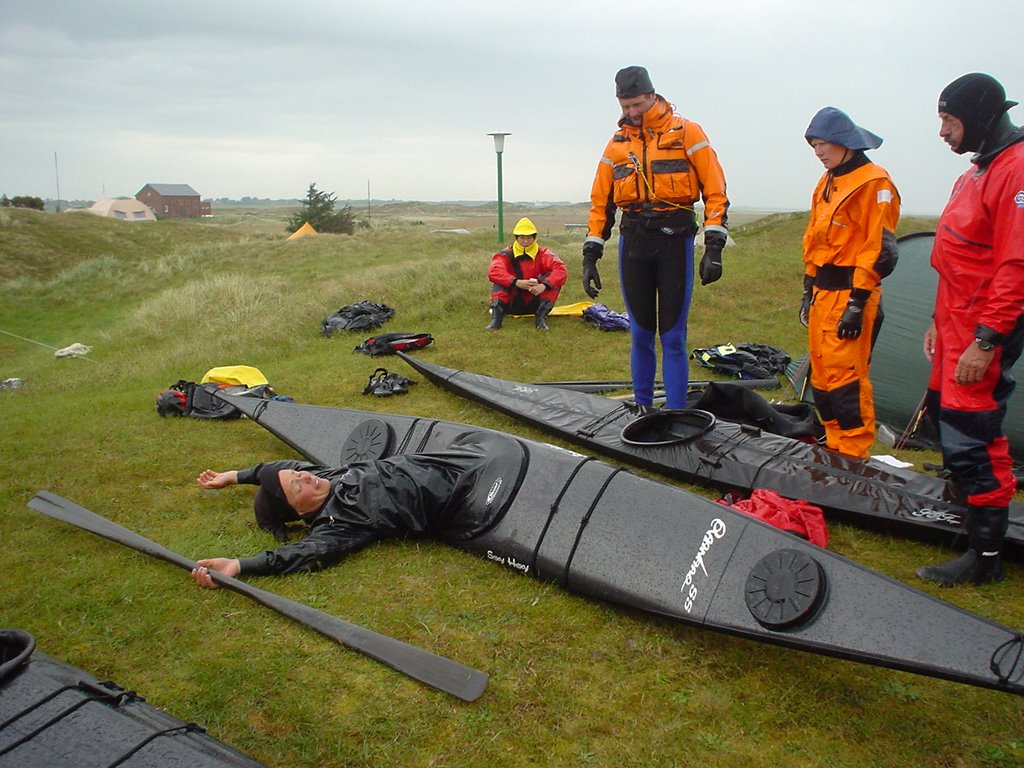
Playing Cinderellas' shoes with Freyas' kayaks
Balance brace on the green
Forward stroke with Bernhard
Family Hakola arriving with Umyak
Back in Neuharlingersiel: fish and chips

Wednesday, May 31, 2006

Die Paddelleine - the paddle leash

paddleleash
One of the subtile differences between the Dutch and German seakayaking philosophy concerns the paddle leash. I have never met a Dutch seakayaker with the paddle on a leash. Within the Salzwasserunion it's compulsory. At our course with Dutch and German participants this situation caused some confusion and even some commotion.
My personal view on the leash-thing is quit indifferent. With or without paddle leash: there is no excuse for losing your paddle! Dutch kayakers are trained to keep a hand on the paddle all the time: also in a rescue situation. When you have difficulties with this, a paddle park or a paddle leash can help. So when you feel better with a paddle leash: use it! It's up to you!

In our mixed course I noticed that the German paddlers -in the beginning- didn't know what to do with the paddles of the Dutch victims in a rescue situation. That's no wonder as they were not trained for this situation. They soon got used to it. On the other side: I must admit that some Dutch paddlers did loose contact to their paddles during the excersises. Grrrr... They should train somewhat more ;-). OK: using a paddle leash makes handling a rescue situation easier... And when you use it the right way it's not in the way while paddling, rolling or bracing.
Contra the paddle leash might be (the fear for) a chance of strangulation, and it can tangle around all kind of things... Again: Make your own decission.

I have a short line with two carbiners on the front deck of the kayak. It's meant for short tows, or to tie the kayak up when it's floating on the water. But in a rescuesituation I can wrap it around the paddles of myself and/or the victim and use it as a sort of paddle park. The idea is not original: Atlantic Kayak Tours even sells prepared lines for this use...
The picture above shows a very sophisticated (and expensive) NRS-Paddle leash. However you don't have to spent much money: it's very simple to make one yourself (don't forget a quick release option).

PS:
At the end of the Spiekeroog course two Dutch kayakers were paddling with the paddle on a leash.

Spiekeroog day 1-3

Saturday 20-5-2006
The meeting with the group at the slipway in the harbour of Neuharlingersiel was planned at 2.00 PM. It’s a 350 km-ride from Woerden to Neuharlingersiel, so starting the trip at 9.30 AM should have given more than enough time. Yet it became a close finish. We arrived exactly at 2.00 PM. Navigation on the road requires some attention, we missed an exit and almost finished in Cuxhaven... It’s a shame: two kayakcoaches 40 degrees and 30 miles off the course..…

Everybody arrived in time in Neuharlingersiel and started unloading the kayaks and sorting out the gear. Rolf (touring-guide from the SAU) was in Spiekeroog and arrived in style by seakayak in Neuharlingersiel. He paddles a unique kayak: self-designed and -built, inspired by the original hard-chined Greenland kayaks. I love the looks (later I made a test paddle: it made a good impression).
It was rainy and windy. We used the waiting-room of the ferry to make acquaintance with the members of the group, and divided the group in two sub-groups for the crossing to Spiekeroog. As we departed at high tide at 6.00 PM wind was decreasing and we had nice paddle to Spiekeroog under a threatening dark sky.

Sunday 21-5-2006
Seewetterbericht Deutsche Bucht 6.40 AM: SW-5/6 Bft, later 7 Bft
High Tide 6.42hr, Low Tide 13.02hr
Due to the weatherforecast we made a slow start. Conditions proved to be better than expected: 4-5 Bft. We used first paddle to get familiar with wind and waves from different directions and paused at the north side of Langeoog.

After the turn of the tide we paddled back to the beach at the campsite were we did the full program of recoveries and rescues. German-Dutch communication was very intense with the rescues… And that was not only because the German participants were not used to the Dutch that didn’t have their paddles on a leash…
The evening program in the old rescue-boathouse was dedicated to trip-planning.


Monday 22-5-2006
Seewetterbericht Deutsche Bucht 6.40 AM: Gale warning, S-SW-5/6 Bft, gales up to 8 Bft
High Tide 7.56hr, Low Tide 14.11hr
Again there was no reason for an early start. Govert did a workshop on the beach on the forward stroke.

On the water towing under rough conditions was the main issue. I paddled with my group further out at sea, but wind and tide were that strong that we hardly made any progress. In the afternoon we sat in the boat-house again for a First Aid lecture by Stephen.

Tuesday 23-5-2006
Seewetterbericht Deutsche Bucht 6.40 AM: Gale warning, SW-7/8 veering NW, decreasing 5/6 Bft, later SW 6, gales
High Tide 9.10hr, Low Tide 15.27hr

You get used to everything, even to horrible weatherforecasts. We noticed that everyday after midday wind decreased. So this morning we started in the boathouse again: to work on the theoretical exercises the SAU-participants had prepared. In the afternoon we paddled out to the Robbenplatte to exercise landing in the surf zone. Everybody enjoyed playing around. On the way back Stephen simulated an accident. Kaat acted immediately, but Stephen had learned a lot of the Dutch kayakers and annoyed Kaat by making a mess with his paddle. The group had a lot of work collecting all the gear. At the camp-site it was raining so heavy that we did the evaluation of the day in the women toilet…

Tuesday, May 30, 2006

Impressions of the NKB-SAU Spiekeroog course


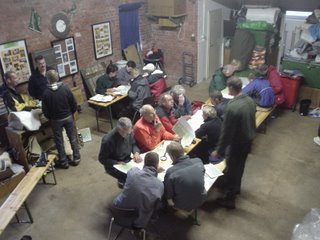
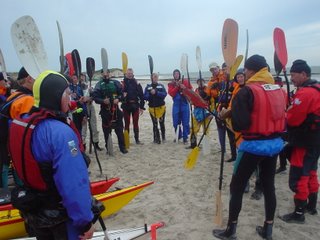
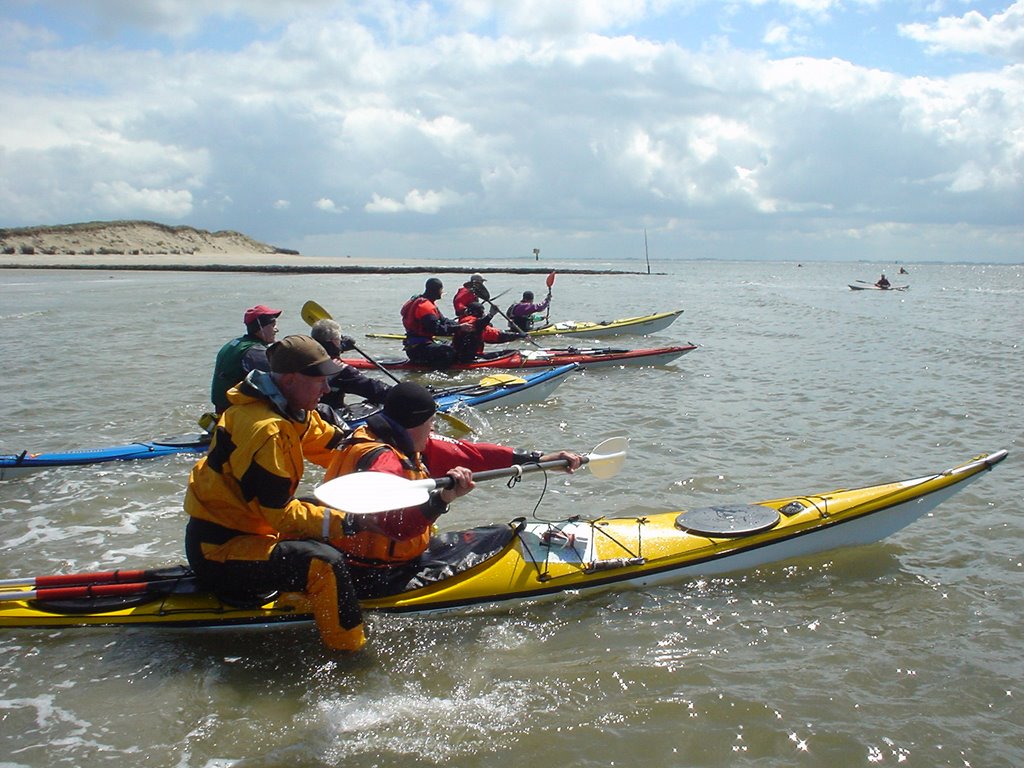
Sunday I posted all my pictures of the course. And, as there is hardly any limit to digital photography with the giant capacity of memory sticks today, that's a lot of pictures. One can have too much of a good thing. In Dutch we say: "je ziet door de bomen het bos niet meer” - you can't see the wood for the trees. So it's time for a quick-guided tour!

The course was a pilot-project: the first seakayaktraining ever organised by the Dutch NKB and German SAU together. We wanted to learn about our mutual standards, the level of skills, the coaching styles, the drive of the German (resp. Dutch) kayaker, and to get more familiar with the Ostfriesische Inseln – the German North Sea coast. Above all, I wanted to have a good time with an international group of kayakers.
Back home, I conclude there is a lot in common between SAU and NKB. The demanded level of skills for the certificates Zeevaardigheid and Seebefähigung A is almost equal. Both certificates base on the BCU 4 Star-standard. Perhaps the Dutch accentuate a bit more the practical experience (e.g. in surf) while the Germans pay some more attention to the theoretical preparation of the pupils. But those are minor differences.
It’s difficult to say anything about differences in coaching styles as Govert (NKB coach) replaced the SAU coach Urs (Urs couldn’t do the course because of medical reasons). So it’s difficult to compare, but we got some remarks and feedback of the German participants and assistants. My impression is that the NKB-style is more based on learning by doing.
Personally I find it very important in a course to create an atmosphere where the students are stimulated to experiment. The best way of learning is experiencing yourself if your solution works. The student drives his own learning; the coach accommodates and facilitates this by creating learning situations, asking questions and giving feedback. I prefer a non-directive style, but of course it should be appropriate to the situation, the group and the learning goals. Bernhard (SAU Coach) joined the course for the last two days for the examination. I noticed our ideas about coaching go in the same direction.
Govert and I divided the group of 17 participants. I coached my group together with Stephen (SAU assistant). That was a great experience! I am astonished how natural it worked out: I like the way Stephen handles a group of people, it contributed so much in creating the right atmosphere. Thanks Stephen!

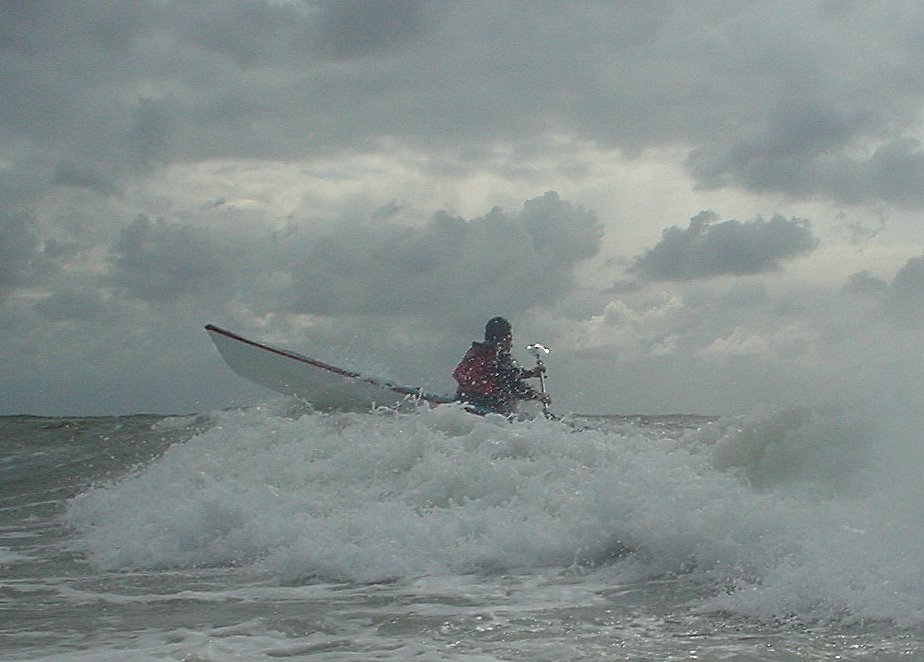
And now up to our program. What did we do? Not what we intended to do. We wanted to make a multi-day trip in the course. The weather (forecast) didn’t allow us. Day by day we adapted our program to the weather situation. It was cold and very windy, yet we were on the water every day. Sometimes the conditions, waves and wind, were above 4-star level: not ideal to exercise the perfect technique, but very good to experience different sea-states…

To be continued:
After this “general introduction” I will describe the daily program in the next posts.
Monday, May 29, 2006

Back home: the "Spiekeroog-pictures"


Yesterday Govert and I returned from the Spiekeroog course. It was a rather cold and stormy week, nevertheless we had great fun with the German and Dutch group. A report and more pictures will follow soon, but first I am busy drying and sorting my gear (while work and family life goes on...).
In particular for the course members: all my pictures (205 pics: good and bad, unsorted, uncensored and unprocessed) are uploaded to Mijnalbum.nl . You can download the photos by the button "opslaan" in the frame on the left side of the photos.

Friday, May 19, 2006

Gone paddling...


Next week no blogging, but paddling in Germany: the Spiekroog course -> a coproduction of the NKB and the Salzwasserunion.

De zee neemt.... In memoriam


Between the kids-party for Jelle's Birthday and me busy packing the last things for Spiekeroog, I read about the terrible accident at the Volvo Ocean race. Hans Harrevoets died. Condolences to the family and the team.


From: http://team.abnamro.com/ :
5/18/2006 8:24:20 AM GMT TRAGEDY ON ABN AMRO TWO
Hans Horrevoets, one of the Dutch crew member aboard ABN AMRO TWO, died earlier this morning after being swept overboard from the boat.ABN AMRO TWO was sailing downwind in 25 – 30 knots of wind under main, fractional spinnaker and staysail. Seb Josse, Skipper of ABN AMRO TWO was at the helm, Hans, 32 of the Netherlands was trimming the spinnaker sheet, Nick Bice, Andrew Lewis and Lucas Brun were also on deck. The boat nosedived down a wave and water came washing back down the deck, when the water cleared Hans was no longer on deck.ABN AMRO TWO Navigator Simon Fisher explained the incident, “Immediately Seb hailed a ‘man overboard’ and we initiated man overboard procedures and we put in place the GPS positioning. The boat immediately turned around and began to search for him, meanwhile raising the alarm on shore. After Hans was found he was lifted back on board and the Accident and Emergency(A&E) department at Derriford Hospital, Plymouth, UK was notified that we had a major medical emergency and to stand by. Unfortunaly our attempts to resuscitate him were not successful."ABN AMRO TWO Skipper Sebastien Josse said, “We are all devastated by the events that took place this morning and all our thoughts are for Hans’ family. Throughout the whole MOB (man overboard) procedure the whole crew handled themselves calmly, professionally and with the utmost maturity. It is with deep regret that we were unable to resuscitate Hans.”Jan Berent Heukensfeldt Jansen, Managing Director of TEAM ABN AMRO said, “We are all shocked and devastated by this terrible news and our thoughts now are very much with Hans’ family. We are all aware of the risks that sailors face but nothing can prepare you for this kind of tragedy. My thoughts are also with the crew who I understand behaved in the most professional manner and reacted immediately and I wish them a safe passage home.”Glenn Bourke, Chief Executive Volvo Ocean Race said, “All of us at the Volvo Ocean Race are deeply saddened to learn of the loss of ABN AMRO TWO crew member Hans Horrevoets. At this time our thoughts are with Hans’ family and friends, his fellow crew members and all the members of TEAM ABN AMRO. Ocean racing carries inherent risks and we do our utmost to minimize those risks with the mandatory safety equipment we have on board. However, when an accident like this occurs it is a shock to everyone associated with the race. The Volvo Ocean Race family is a close-knit community and we will all lend whatever support is needed at this tragic time.The crew are no longer in racing mode but are making their way to Portsmouth as quickly as possible and will make a decision on further participation in the race during the Portsmouth stopover.

Saturday, May 13, 2006

Packing for Spiekeroog

With one week to go, I started to sort out the gear needed for the seakayaktraining at Spiekeroog. The more stuff you get, the more choices to make. The first is: "which seakayak?" That wasn't difficult: the Valley Pintail (because it's new..). This limits the amount of gear I can take along. The Svalbard has more volume.

I want to travel light. But there are many important things you must take along, and there are so many things that might be useful. First I collect all the gear I could possible use in our guest room. Next few days I am going to select the things I leave at home.
"What to wear?" -> This is one of the new choices: until last year I always used a wetsuit, but now I have also got a drysuit....
"Which tent?"-> The two person Birdland-tunnel, or the Northface solo-shelter I bought some time ago in Berlin? The last one packs smaller and weights the half. But I haven't tried it yet...

Birthday celebration

This week both Raphaela Legouvello and Freya Hoffmeister celebrated their birthday at sea. Congratulations ladies! Raphaella is making a solo crossing of the Indian Ocean on a surfboard since 8 april this year: from Australia to the Reunion Islands, 6500 km, 70 days, it sounds very long and lonely... With modern means of communication however contact is no problem: you can belisten her daily phone sessions on Raphaellas’ website every afternoon. Freya paddles with Wendy Killoran along the south coast of Newfoundland. Wendy is doing a circumnavigation of "the Rock", Freya joined her for two weeks. Next week she takes the plane back to Germany and comes to the meeting of the Salzwasserunion at Spiekeroog. I am looking forward to meet Freya there! Though I should be careful as Derrick asked her to smack me on the head ;-)

I am also often travelling around during my birthday: september is a busy month with the Seakayakmeeting of the NKB at Vlieland, the PZH - race-biking weekend in the Ardennes, and…
This year the NKB-seakayakmeeting is the reason why I celebrate my birthday without family. But that’s only a few days and a few miles away from home. More serious is that I am not at home at the birthday of my twelve year old son Jelle next week (because of the Seakayakcourse of NKB en SAU at Spiekeroog). We have planned his kidsparty some days earlier, but I will not be home in the weekend when the family comes. Not quite the way to make yourself popular with grandmothers and granddads… Poor Janine.
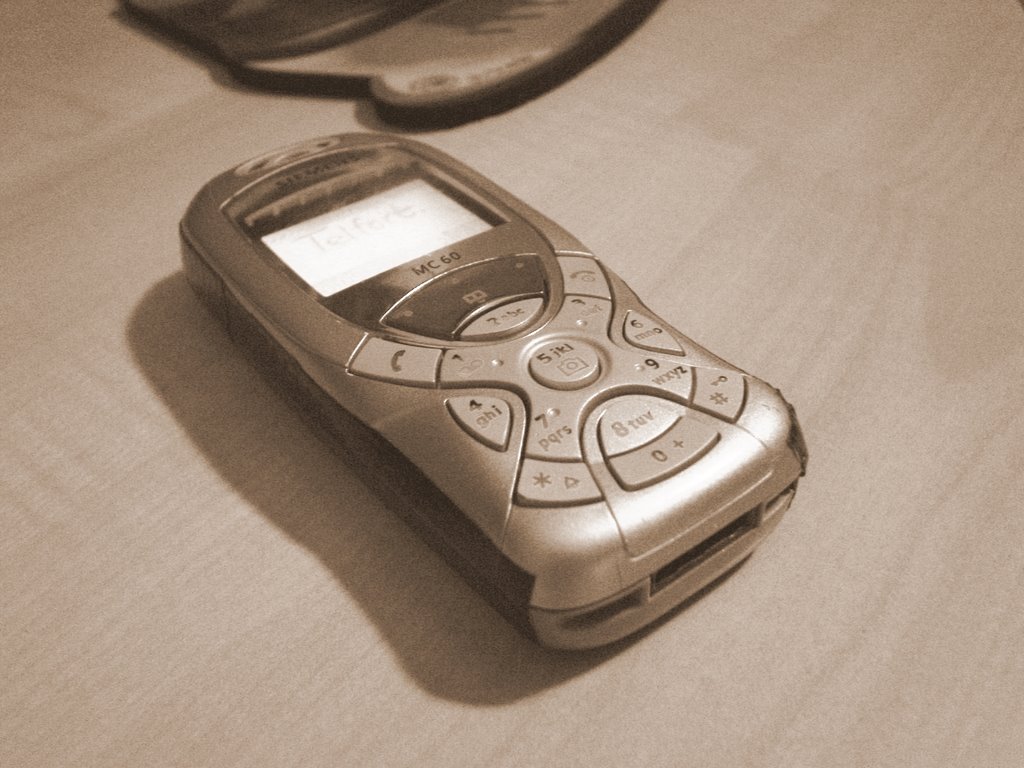
Jelles’ biggest desire for a birthday-present is a mobile phone. The bygone weeks I couldn’t pass by any telecom-shop with Jelle. I never knew there are so many of those shops! Mobile phones are very important for a twelve year old kid. Some adult kayakers share this interest: Wenley and Derrick recently posted items about important specs of their favourite phones. According to Jelle, they are both riding the wrong horse: it isn’t waterproofness, durability or sturdiness that counts: a phone should be "cool, bling, foldable" and above all offer a lot of games! Jelles’ process of selection is inimitable, but this morning we finally succeeded.
My own phone doesn’t meet any of the specs of Jelle, Wenley nor Derrick, but with duck-tape preventing it from falling apart in pieces, it’s the one and only real kayakphone!

Wednesday, May 10, 2006

Handy Hint: compass on the hatch cover

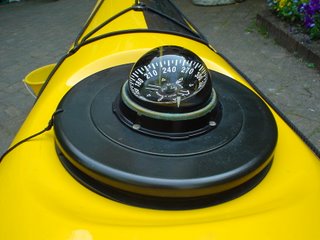
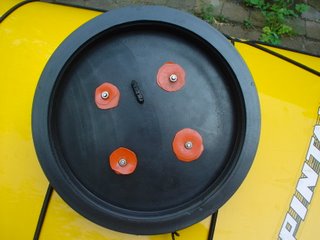
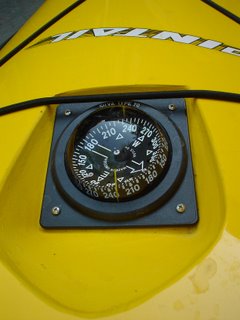
On special request of Jörgen, today a post about the "compass on the hatch-cover". Two of my previous seakayaks, the Meridian and the Svalbard, didn't have a factory fitted recess on the deck for a compass. I didn't like to cut holes in a virginal gel-coated polyester deck, so I bolted a Silva 85 compass (= Nexus 85R Marine) on the cover of the front hatch: a simple but effective solution. In the beginning I was afraid this position was to exposed for damage, but in over 6 years of intensive use, I never had any problem with that. Advantage of the Silva 85 is that it is a lot bigger and -with larger numbers- it is easier to read than the (mostly on seakayaks used) compasses of the Silva 70-series.


Mounting the compass is easy: the rubber of the VCP-hatches fits tight around the bolts so there won’t be any leakage. Be sure to use non-iron bolts and nuts near a compass!


To compare: the Silva 70P on the Valley Pintail with a recess in the deck:

Tip: Lots of Handy Hints on seakayaker.co.uk ; very useful site!

Sunday, May 07, 2006

The Svalbard is back! ... and just another toggle pic

The Carfree Girls will be upset: today I made more than 150 km's by car with a kayak on top, just to do some shopping. It's a pitty that kayakshop Arend Bloem isn't any nearer to Woerden. My excuse for visiting Arend this time was the urgent need for (1) a new sprayskirt for the Valley Pintail and (2) some extra waterproof luggage bags. I must get my gear ready for the kayakcourse on Spiekeroog. Arend and his crew have seen me often lately. Sure they don't mind!

In general I am not particullary fond of shopping. One exception: the kayakshop! Shopping at Arend Bloem is a social happening, almost everytime I meet kayakfriends looking for gear. And Arend has always interesting new gear in his shop. Today it was the first Svalbard from MSC. The Svalbard is a Dutch design seakayak that Jan van der Sluis (in Holland and Germany well known for his perfection in building kayaks) built. Some years ago however, Jan stopped building kayaks for Kajakcentrum de Biesbosch. But now the Svalbard is back again. Made in the Czech Republic by MSC in coöperation with Jan, for about half the prize it did cost when it was made in the Netherlands... The first impressions of the building quality are good, finishing seems to be at least comparable to the renown British Seakayaks. Comparing with my Svalbard-kayak built by Jan, MSC has simplified some complex details like the curved bulkheads and the water draining hole at the compass-recess, but that doesn't take away from functionality.
Ok, it is not a very original idea to produce in a "low-cost"-country an old design again, perhaps it's good for the prize, but in potention it kills innovation. Said that, I must plead for MSC. They really do more than just imitate. They have added improvements and new options to the Svalbard design (like the possibility of adding a rudder, and a small day hatch in front of the cockpit), and they will also produce a complete new (Dutch design) seakayak: the Vestvika.

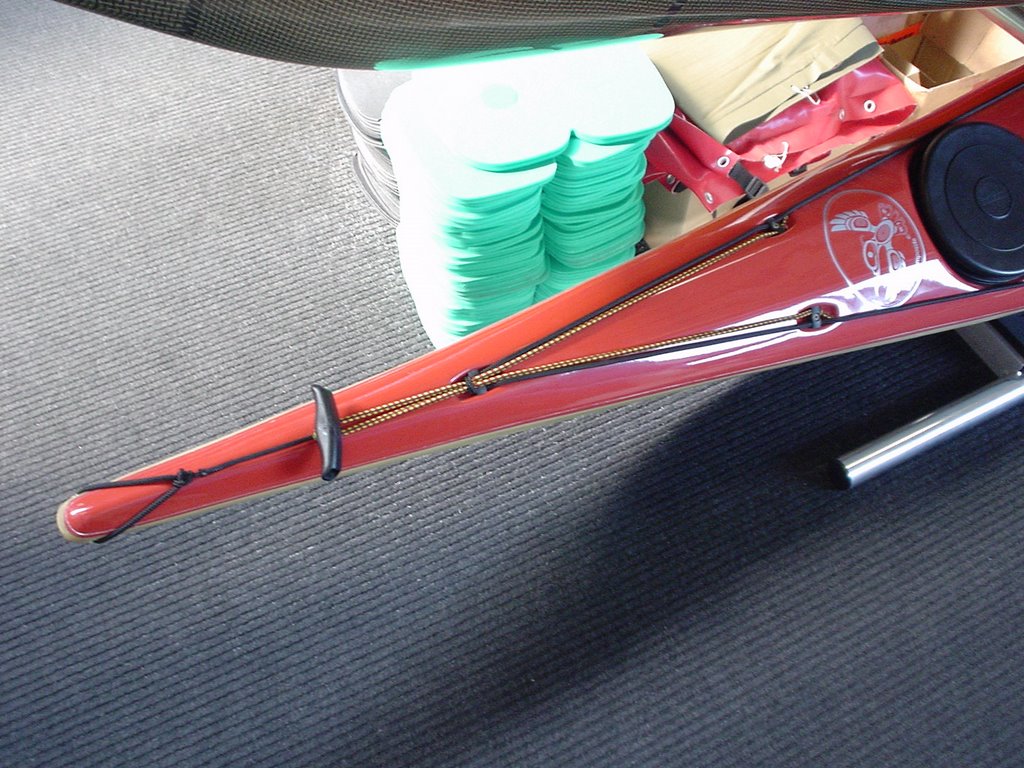
The picture above shows a detail of the MSC Svalbard (click on the picture to see the details). The toggles are fastened similar as I described some time ago for my Pintail: with a long single rope. Interesting here is the mounting of the elastic cord that holds the toggle in its resting postion. I did this with a short loop from the front cleat to the toggle. Problem with my solution is the short distance: I had to experiment with elastic cords of different thickness: the cord must be elastic enough to stretch from the resting position of the toggle till the pull out position. Only a thin elastic cord was elastic enough. On the MSC Svalbard the elastic cord is not fastened on the front cleat, but on the cleats in second position. This gives the elastic cord more length, so the relative difference between the resting position and the pull out position is smaller. The advantage is you can use a stronger, less elastic shock cord.

Friday, May 05, 2006

To paddle or not to paddle?


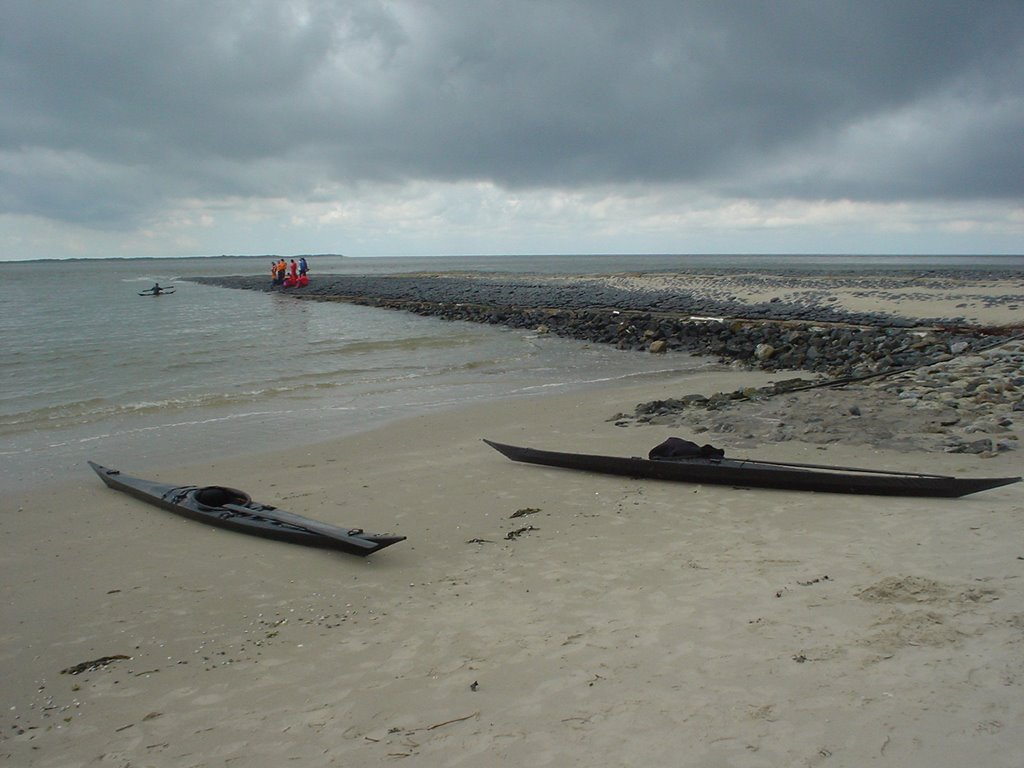
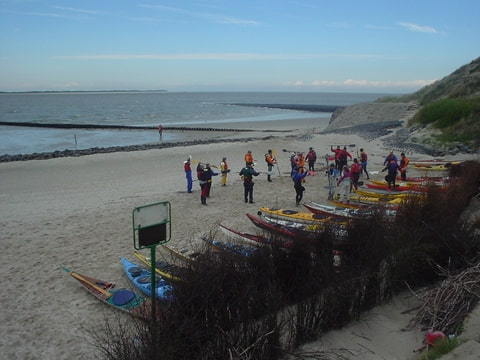
29-4-2006 Voordelta, Aardappelenbult: René testing the new Vestvika.

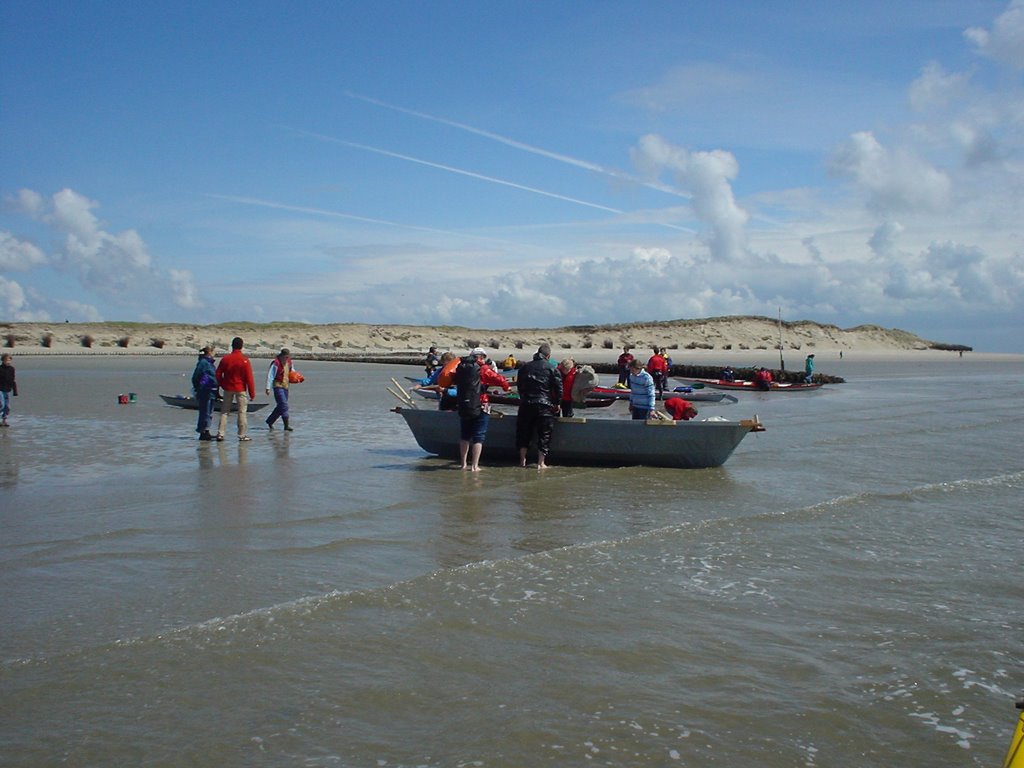
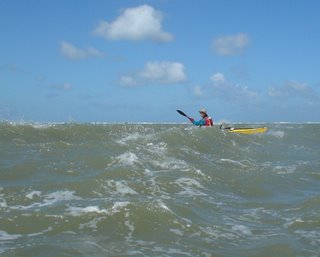
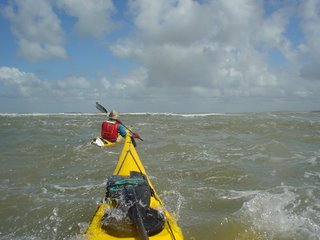
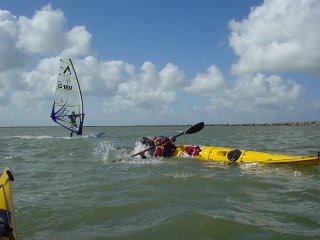
I will finish this post tomorrow. René has already written a report of our trip on his blog -> you can read there more about my doubts and mixed feelings on cancelling a planned seakayaktrip. Here are some pictures of this sunny (but very cold!) day on a confusing (nl: "warrige") choppy (nl: "woelige") sea.

It was my first saltwater experience with the Pintail. It did a good job: it's a fun kayak to paddle under these conditions, reliable and manoevrable.

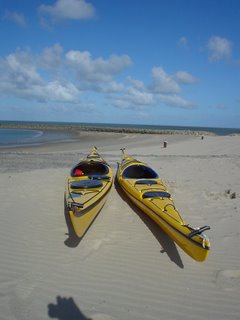
Valley Pintail (left) and VKN Svestvika (right), ready for first saltwater launch.